
Designed with the science of learning
Beyond exam preparation, our teaching methodology and lesson materials are grounded in the science of learning to help your child become a thinker, a problem solver, and a lifelong learner.
Our Programme
At Science of Learning, each topic is thoughtfully designed to develop your child’s understanding, confidence, and ability to explain science clearly. Here’s how we structure our lessons:
Key Concepts + Guided Practice
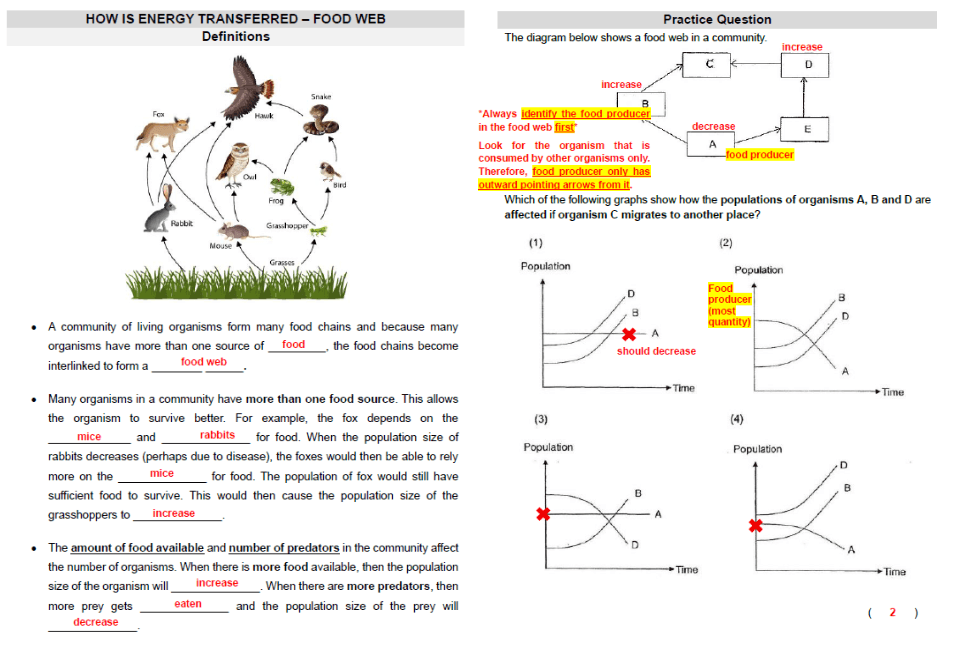
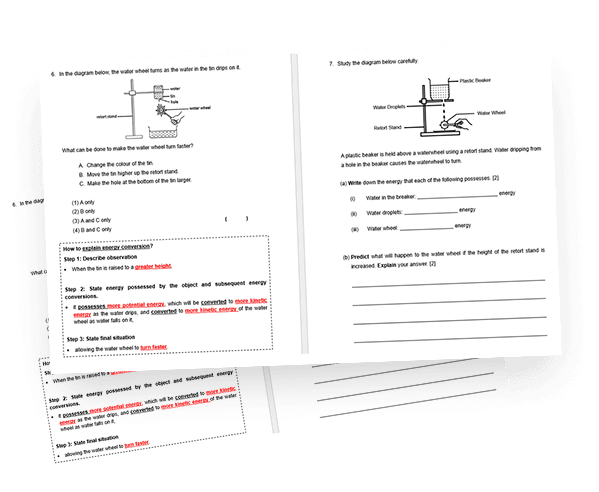
Start Strong with Notes & MCQs
Each new topic begins with easy-to-understand notes and guided practice questions (MCQs & short answers). These are designed to test your child’s understanding right away.
Why this works:
- Encourages active recall — a proven method to boost memory retention.
- Clears up misconceptions early.
- Builds confidence through quick wins.
Practice by Question Types
Strengthen Thinking with Sorted Questions & Templates
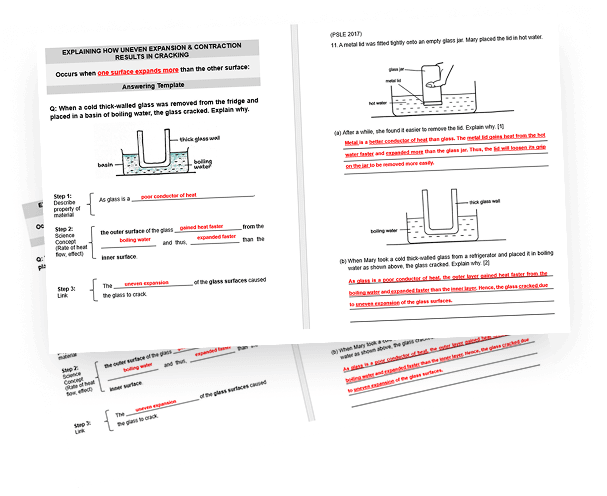
Next, students tackle practice questions grouped by common patterns (e.g. cause-effect, comparison, application). We also teach structured answering techniques using templates.
Why this works:
- Reinforces learning through spaced review.
- Builds analytical skills by teaching students to identify question types.
- Improves written answers with guided scaffolds.
Integrated Revision: Interlinked Topic Practice
Build Connections
After learning major topics, students attempt revision papers that combine related topics – just like in real exams.
For example, Matter & 3 States, Heat & Temperature, and Water Cycle & Changes of States should be revised together to deepen understanding.
Why this works:
- Follows the principle of interleaving — mixing topics boosts long-term retention.
- Encourages conceptual thinking over memorization.
- Prepares students to solve open-ended, multi-topic questions with flexibility.
Visual Learning Aids
Bringing Abstract Concepts to Life
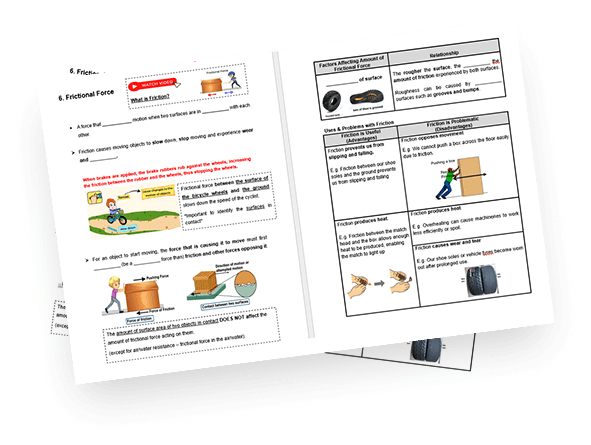
Difficult topics like energy conversion and forces are supported with short videos, animations, and analogies that make them easier to visualize and remember.
Why this works:
- Uses dual coding — combining visuals and words enhances understanding.
- Bridges the gap between theory and real-world application.
End-of-Class Quizzes
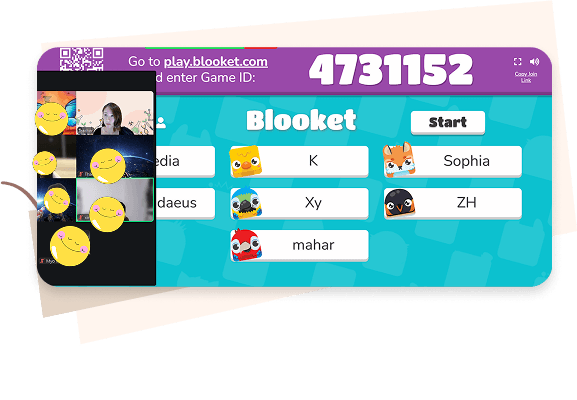
(5 minutes Blooket / Gimkit Quiz)
Joyful Recall & Reinforcement
Lesson occasionally ends with a quick, game-based quiz. It’s a fun way to review key concepts and end class on a high note.
Why this works:
- Reinforces learning through low-stakes testing.
- Boosts motivation and participation.
- Builds a positive emotional connection to science.

Secure a spot in our classes –
Limited spots available for each class per level